Animals 3D STL Pack – Molds & Casting Ready
10 $
| File Format: | obj |
| 3D Printable: | Tested on FDM & Resin Printers |
| Scale: | – |
| Geometry: | High poly |
| Separate Parts: | 4 objects in one file |
| Updated: | Version 0.1 |
| Scales (miniature): | (Re-sizing available) |
| Commercial License: | Personal & Commercial Use |
Description
Animals 3D STL Pack – Molds & Casting Ready
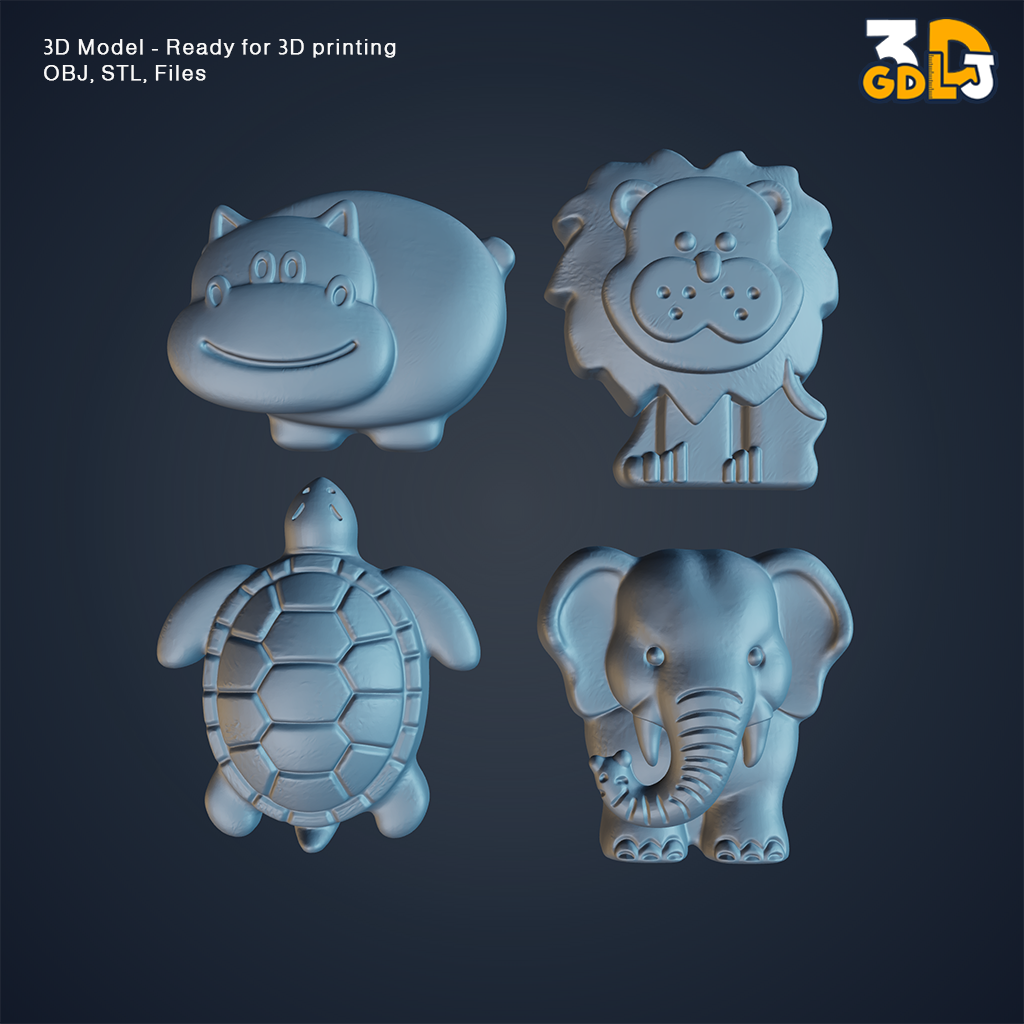
A collection of 3D cartoon animal figurines in a soft and cute style (Chibi/Stylized ), designed with prominent lines and clear details that make them ideal for 3D printing and silicone mold making.
Model Descriptions
- Hippopotamus: A full, rounded design with a smiling face and prominent eyes. Its smooth surfaces minimize air retention and facilitate casting and cleaning.
- Lion: An endearing cartoon design that highlights the lion’s curvy mane and softly sculpted facial details, giving it a childlike and charming appearance.
- Turtle: A flat, perfectly sculpted model that showcases the turtle’s shell details and prominent geometric divisions with precision. It’s an ideal choice for pieces with a flat base.
- Elephant: A well-proportioned cartoon sculpture that highlights the large ears, coiled trunk, and tusks with prominent sculpted details, without sharp angles or excessive undercutting.
Silicone Mold Making (RTV-2 Silicone)
These pieces feature excellent draft angles and a relative absence of complex deep undercuts, making them very flexible for mold production:
Suitable Mold Type:
One-Part Open Pour Molds/Block Molds: Since most of these pieces have a back or base that can be flattened, a one-part open pour mold is the easiest and fastest option for casting bass-relief or flat-backed sculptures.
Cut Molds:
For full 3D printing, a single silicone block can be poured around the master, and then a zig-zag cut can be made to easily remove the sculpture without the need for a two-part mold.
Recommended Silicone Hardness (Shore A):
Low to medium hardness silicone rubber between Shore A 10 and Shore A 15 (or up to Shore A 20 maximum) is recommended. This flexibility allows for easy removal of cast pieces without breaking protruding parts (such as elephant trunks or turtle limbs) and prevents mold tearing during repeated use.
If the models are printed using resin 3D printing and platinum silicone (addition cure) is used, ensure the piece is thoroughly washed and cured, and a primer/sealer is applied to prevent cure inhibition. However, if tin silicone (condensation cure) is used, there is no need to worry about cure inhibition.
Reviews (0)
Only logged in customers who have purchased this product may leave a review.
Reviews
There are no reviews yet.